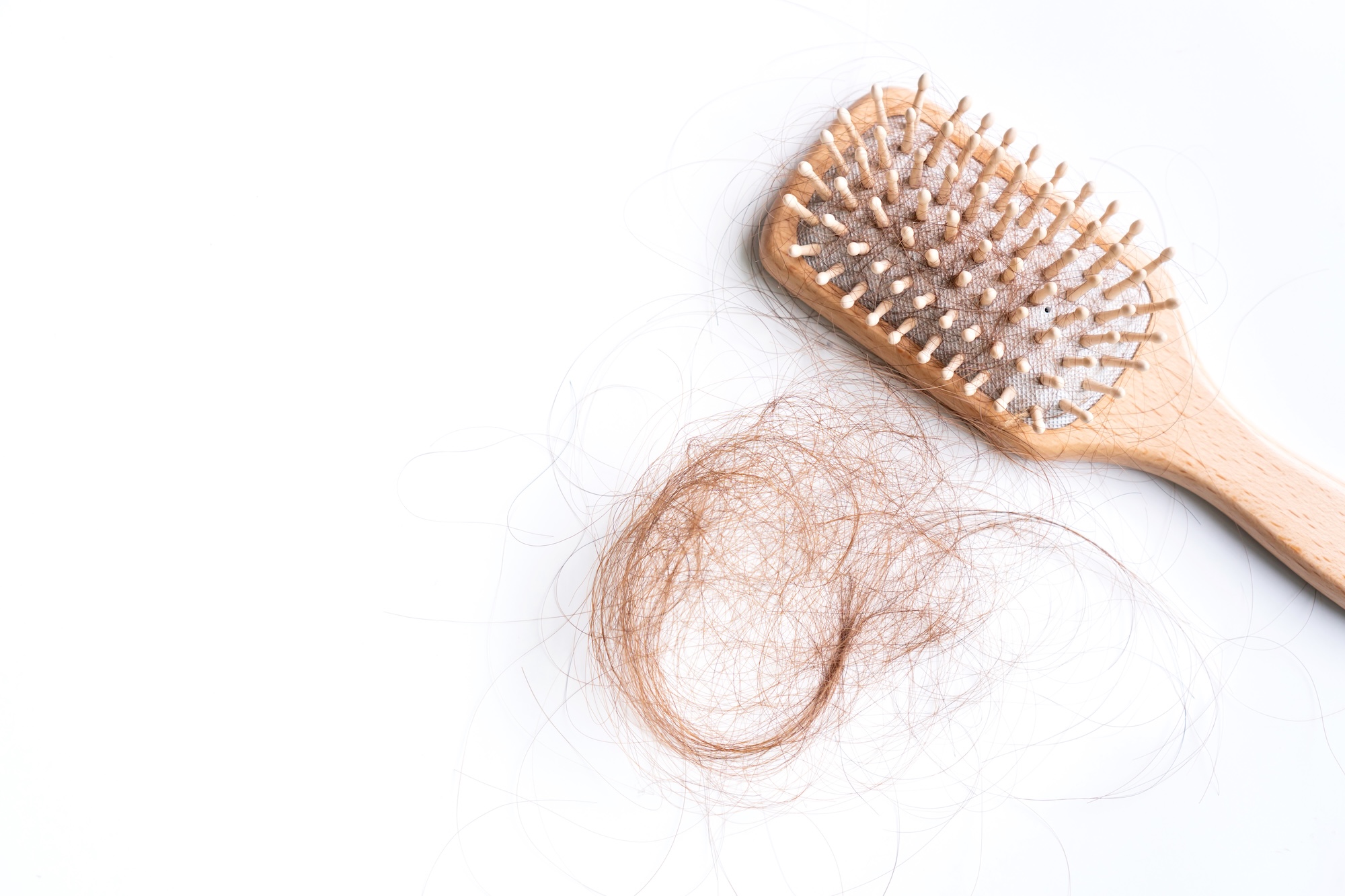
Pregnancy and posptartum are WILD times! Think about it. Your body grows a whole human being from scratch, gives birth, keeps that little human alive, and just when you feel you have a handle on your new life, your hair starts falling out. Postpartum hair loss isn’t a little either, it’s a concerning amount of hair.
Before you panic at the clumps of hair swirling around your shower drain, this is very common, and thank goodness, it’s also temporary.
When does this start?
Most mothers start to notice postpartum hair loss around 3 months post-birth but this can happen sooner or a little later than that. And since people don’t typically connect their hormones with something happening three months later, it can feel like this comes out of nowhere.
Why is this happening?
Like other things, we can throw blame towards hormones.
People who are not pregnant, typically loose about 100 strands of hair each day, however, during pregnancy, increased estrogen levels keeps more of your hair in the growth phase, which explains why you may have had full, thick, glorious pregnancy hair.
After birth, the estrogen levels drop significantly and all those hairs that stuck with you (pun intended) during pregnancy decide to peace out all at once.
The medical term for this is, telogen effluvium. Long story short: your hair is playing catch up on the shedding it did not experience during pregnancy.
How long will this shit last?
The shedding that’s experienced is usually the worst several months after giving birth but does tend to improve within 6-12 months post birth.
Then comes the next adorable phase: Those tiny black hairs sticking straight out around your hairline. Good news is, that’s a clear sign that your hair is growing back. Not so great news is, they give zero f*@ks about your hairstyle.
What can you do about it?
Unfortunately, there isn’t a magical shampoo out there that will eliminate postpartum hair loss but there are ways to make this less miserable.
Be gentle with your hair. Try and avoid super-tight ponytails or buns, and go easy on excessive heat and chemical treatments. You can also consider a fresh haircut, layers, a different part, or a style that makes thinner areas less noticeable.
Most importantly, this requires time.
If you’re still experiencing postpartum hair loss by the time your baby turns one year or you’re starting to develop bald patches, this may be a sign to make a visit with your healthcare provider to rule out thyroid issues or an iron deficiency.
Until then, take a deep breath and know this isn’t forever and your hair is not betraying you. This is just postpartum being postpartum.
Uptown Doula is here for you! If you would like to connect with your doula, please give us a call.