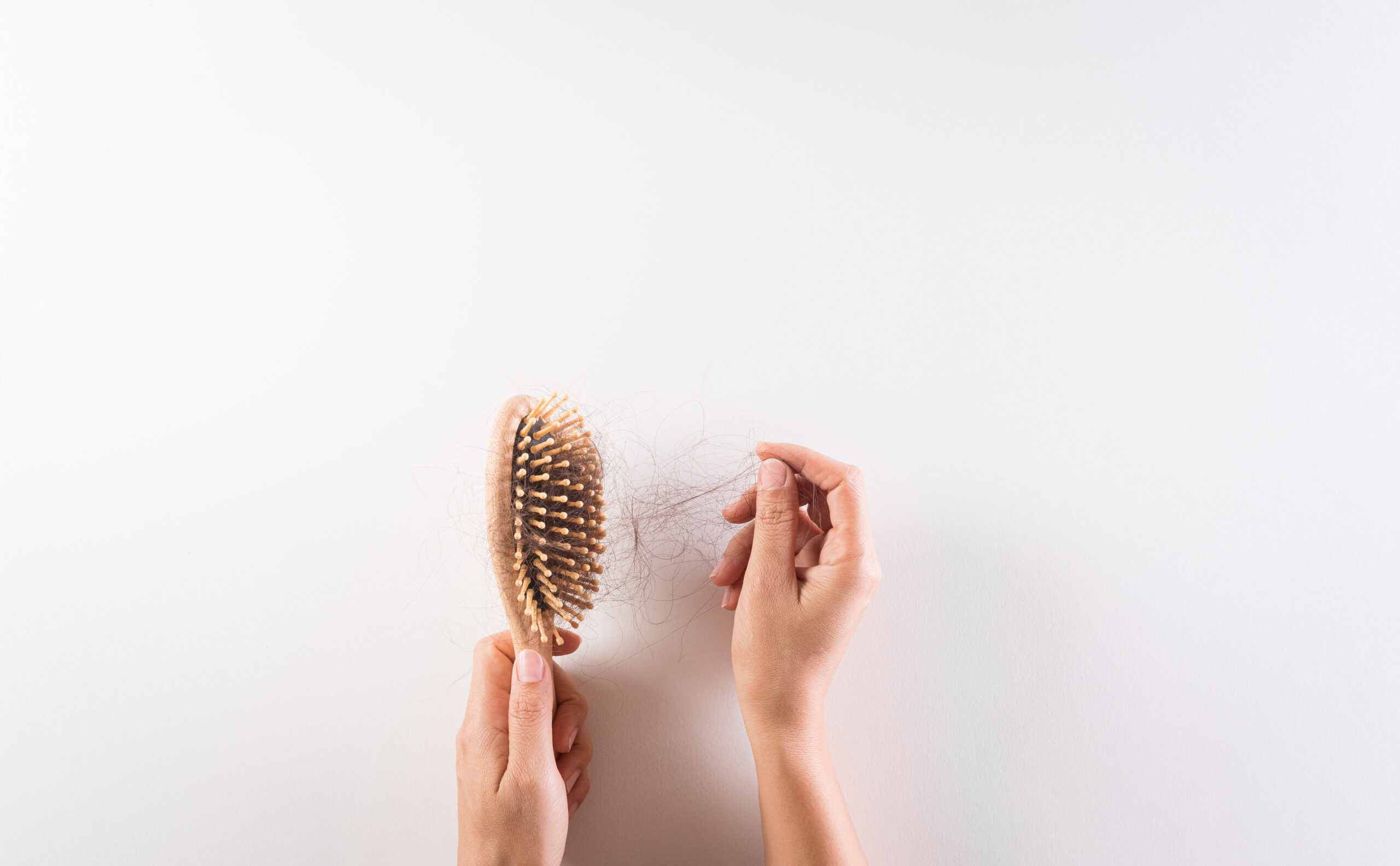
Okay… can we talk about the moment you’re in the shower, a few months after having your baby and you look down and think, is this… all my hair??
Because… same. And I need you to hear this right away, you’re not crazy, and your body isn’t failing you.
During pregnancy, your estrogen levels are high, which keeps your hair from shedding like it normally would. So you’re holding onto hair you would’ve lost anyway. Then postpartum hits, hormone levels drop, and your body basically says, “Alright, we’ve got some catching up to do.” And it all comes out at once. It’s called telogen effluvium, but honestly, it just feels like a personal jab.
Most women notice hair loss around 2–4 months postpartum, and it can seem intense. Like, “do I need to panic?” intense. But in most cases, it peaks around 4–6 months and slowly chills out after that. By the time your baby is getting close to a year, your hair cycle usually evens back out.
But let’s be real for a second, just because it’s normal doesn’t mean it doesn’t mess with you a little. You’re already navigating a completely new version of yourself. You’re tired, healing, figuring out feeding, routines, all of it… and now your hair is falling out too? It can feel like a lot.
If you’re in this phase right now, a few things that can help:
- Continue taking your prenatal/postnatal vitimins (doctor reccommended, of course).
- Go easy on your hair and avoid hight heat products and tight buns/ponytails. Instead, opt for a lose hair style (aka: “The Messy Bun”).
- Stay hydrated and nourish your body with a balanced diet.
And while this is usually just one of those “welcome to motherhood” things… there are times when you should trust your gut and check in with your provider.
When to Reach Out for Help
- If you notice bald spots or you keep seeing heavy clumps of hair come out and you’re past the 6-9 month timeframe.
- If you’re also feeling super drained, dizzy, or cold all the time (this can point to iron or thyroid stuff).
- If you’re not seeing any regrowth by around your baby’s first birthday
- Or if you already have a history of thyroid issues or had a rough postpartum recovery
You don’t have to just “deal with it” if something feels off.
But for most of you reading this? Your body isn’t falling apart. It’s adjusting after doing something really freaking big.
Even if your shower drain says otherwise.
If you’re navigating postpartum and want real, judgment-free support, you can learn more about our team at Uptown Doula.